It started close to home.
The first trees were about family, memory, and doing something tangible when words were not enough.
Our story / Joey
Planting trees did not begin as a grand plan. It began as something personal — a way to put my hands to work, honor Dawne, be with my boys, and make something living out of a season that felt defined by loss.
Somewhere along the way, the work changed me. What started as a diversion from grief became a real passion for trees, for life, and for leaving something useful growing behind us.
— Joey Montes
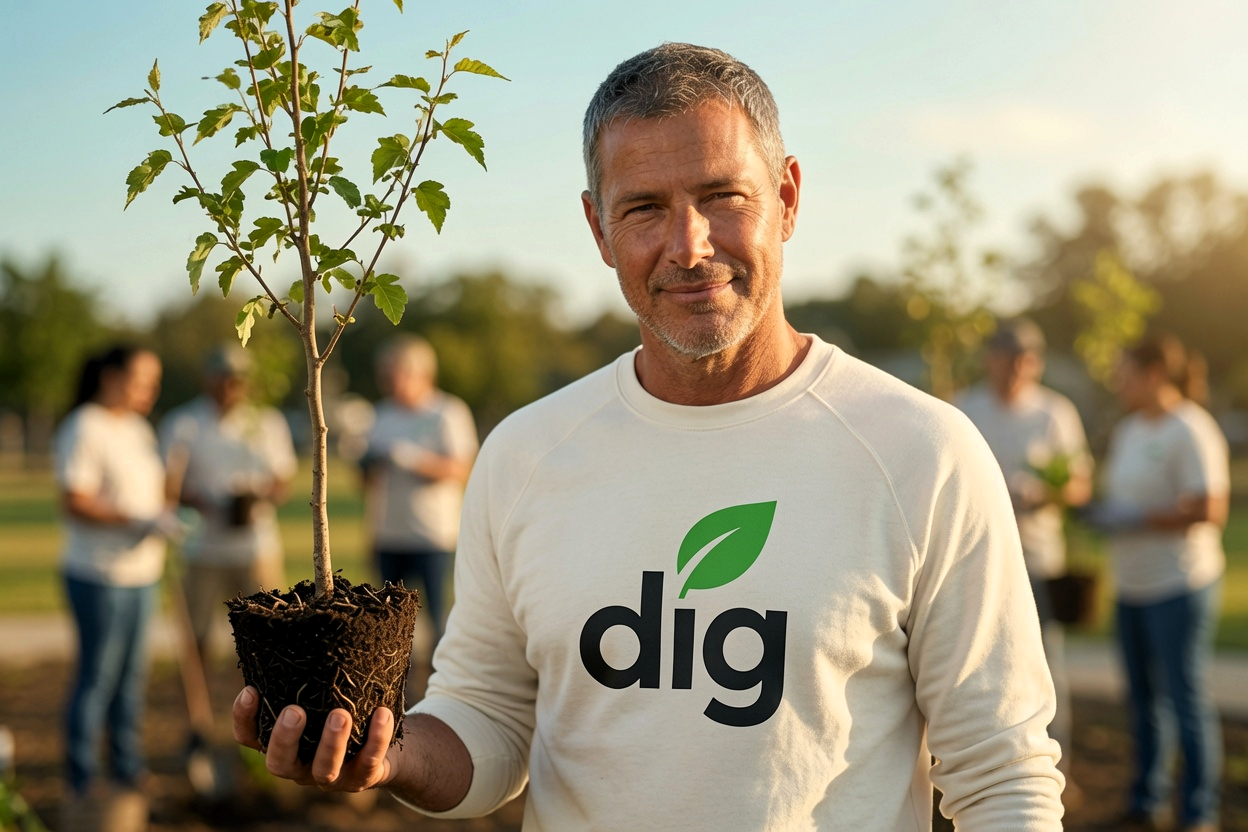
The first trees were about family, memory, and doing something tangible when words were not enough.
Digging, planting, watering, learning species, and watching new growth turned one act into a practice.
The more I learned, the more obvious it became: one simple act can leave a real benefit for people who come after us.
Before there was a program, a mission, or a name for any of this, there was Dawne — and there was a family trying to carry her memory forward.
When Dawne passed, my boys and I picked up shovels with a simple idea: plant something that would keep living.
There was nothing complicated about it. A hole in the ground. A young tree. Soil back around the roots. Water. Care. Then the quiet hope that, given enough time, this small thing would become stronger than the day we planted it.
That mattered to me. A tree does not erase loss, and I never wanted it to. It gives memory somewhere to live in the present. It changes with the seasons. It needs attention. It creates shade. It becomes part of a place.
The first tree was personal. I did not know it was the beginning of anything else.

Where it began
At first, I was planting because I needed something real to do with the grief — something physical, useful, and alive. Trees gave me that. They required me to get outside, pay attention, learn, and care about what happened next.
And that is the part I did not expect: I started noticing trees everywhere. Their shape. Their age. The way they cool a street, hold a hillside, frame a home, shelter wildlife, or outlive the people who planted them.
What began as something I did to get through a difficult season became something I genuinely loved doing.
The change
I stopped seeing a tree as landscaping. I started seeing it as time made visible — roots going down, branches reaching out, and a future taking shape one season at a time.
Joey Montes
I kept planting. Then I kept learning. The more I understood about trees, the less this felt temporary.
There is a clarity that comes from putting a tree in the ground correctly. The work is immediate, but the result asks you to think in years.
You have to choose the right tree for the right place. You have to think about sunlight, soil, water, mature size, roots, utilities, native habitat, and what happens after planting day. Planting is only the beginning; establishment is the work that follows.
That long horizon changed the way I thought about the whole thing. I was no longer planting only because of what a tree meant to me. I was planting because of what it could mean to a family, a street, a school, a neighborhood, wildlife, and someone I would never meet.
Grief may have pointed me toward the shovel. Life is what kept me holding it.
How it grew
The mission did not arrive all at once. It grew the same way the trees did — one step, one lesson, and one season at a time.
Put a tree in the ground for a reason that matters to you.
Learn the species, site, planting method, and care that give it a real chance to thrive.
Turn a personal act into something families, friends, schools, and communities can participate in.
Plant for shade, habitat, memory, canopy, and a future larger than the planting day itself.
DIG exists to make the next tree easier to plant — and more likely to still be growing years from now.
The idea behind DIG is deliberately simple: do your part. Not everything. Not some impossible gesture. One useful thing, done well.
For us, that means helping people choose resilient trees, understand the site, plant correctly, and care for the tree through the period when good follow-through matters most.
Some people will plant because they want shade. Some because they care about habitat. Some because they want a healthier neighborhood. Some will plant for a child, an anniversary, a new beginning, or someone they miss.
I understand that last reason deeply. But the tree does not stop with the reason it was planted. It keeps growing outward. That is why this story became something I wanted to share.
Where I am now
I did not set out to make trees part of my identity. I just kept finding reasons to come back to them. They remind me that meaningful change is often quiet, physical, local, and patient.
Today, I want to help more people experience that same shift: from thinking about doing something to actually putting something living in the ground and taking responsibility for what happens next.
Choose trees suited to the place and capable of contributing to the local ecosystem.
Good planting includes establishment, watering, care, and enough patience to let roots do their work.
Plant for the future, for your community, for someone you love, or simply because the world can use another good tree.
The goal is not a perfect story. It is a living result that keeps giving back after we are done digging.
The next chapter
Plant for someone. Plant for somewhere. Plant because you want to leave a little more shade, life, and possibility behind you.
Do your part. Plant a tree. • plantsatree.com