Trees make places more livable.
Shade, visual structure, seasonal change, and cooler outdoor spaces all shape how people experience a place.
Why trees
Trees are more than scenery. They create shade, support wildlife, slow rainfall, hold soil, add structure to neighborhoods, and turn empty space into living infrastructure.
And unlike many improvements, a healthy tree can become more useful with time. As roots establish and canopy expands, the benefits can grow with it.
Shade, visual structure, seasonal change, and cooler outdoor spaces all shape how people experience a place.
Leaves, flowers, fruit, bark, branches, roots, and surrounding soil all create opportunities for wildlife and ecological activity.
A tree planted well today can become a larger source of canopy, habitat, shade, and character years from now.
A tree can make the difference between a space people pass through and one they actually want to use.
Canopy creates comfort. Shade can reduce direct sun on sidewalks, yards, gathering areas, play spaces, parked cars, and building surfaces.
That changes behavior. People are more likely to sit, walk, gather, pause, and spend time in outdoor places that feel protected and comfortable.
Trees also soften hard landscapes. Streets, parking areas, buildings, fences, and utility corridors feel different when they are broken up by living form, texture, and seasonal change.
A mature tree can become one of the defining features of a home, block, school, park, or neighborhood—not because it demands attention, but because it quietly shapes everything around it.

Habitat begins with structure
A healthy tree becomes part of a network. Its leaves, bark, flowers, fruit, branches, roots, and surrounding soil can support insects, birds, pollinators, fungi, and other living systems.
Native trees can be especially valuable because they have long-standing relationships with local wildlife and seasonal patterns.
Planting a tree adds more than a trunk and canopy. It adds structure that other life can use.
Living infrastructure
Trees do several useful jobs at once—and they can keep doing them for decades.
Why trees matter
The most important part of a tree is often the part nobody sees.
Roots anchor the tree, explore soil for water and nutrients, and help create a living relationship between the tree and the ground around it.
Canopy and leaf litter can also change how rainfall reaches the soil. Instead of every drop striking bare ground at once, water is intercepted, slowed, redirected, and absorbed across a more complex surface.
That does not make a single tree a complete stormwater solution. But across many sites, healthy trees can become part of a broader system that manages water more naturally.
Good soil and healthy roots are the foundation of nearly every other benefit a tree can provide.
What trees contribute
The value of a tree is cumulative. Its usefulness comes from several overlapping benefits working in the same place.
Create a growing canopy that reduces direct sun and makes outdoor spaces more comfortable.
Provide food, shelter, nesting opportunities, and connectivity within the local landscape.
Use canopy, roots, soil, and leaf litter as part of a more natural water-management system.
Give homes, streets, parks, schools, and neighborhoods lasting visual structure and character.
Large-scale canopy is the visible result of thousands of individual planting and preservation decisions.
No one tree creates a forested neighborhood. But every canopy begins with individual trees occupying real space.
When trees are planted along streets, around homes, near schools, in parks, and across shared spaces, the separate crowns can begin to function as a larger network.
That network influences shade, visual continuity, habitat connectivity, and the overall experience of moving through a community.
This is why losing mature trees can be felt so quickly—and why replacing them requires patience. Canopy can disappear in a day. Rebuilding it takes years.
The right tree matters
Species and site have to fit each other. Sunlight, soil, drainage, available root space, mature canopy size, overhead conflicts, nearby structures, and underground utilities all matter.
DIG uses a native-first approach and emphasizes planting for the long term, not simply choosing what looks good on the day it goes into the ground.
Think about the tree at full scale—not just the size of the tree when you buy it.
Give roots enough soil volume and avoid planting where long-term conflicts are built in from the start.
Favor locally appropriate species that can contribute to habitat and fit regional growing conditions.
Establishment, watering, mulch, and monitoring determine whether the tree gets the chance to become valuable.
Trees make the future visible.
The reason trees matter is simple: they turn time, soil, water, and care into something useful that can keep growing long after planting day.
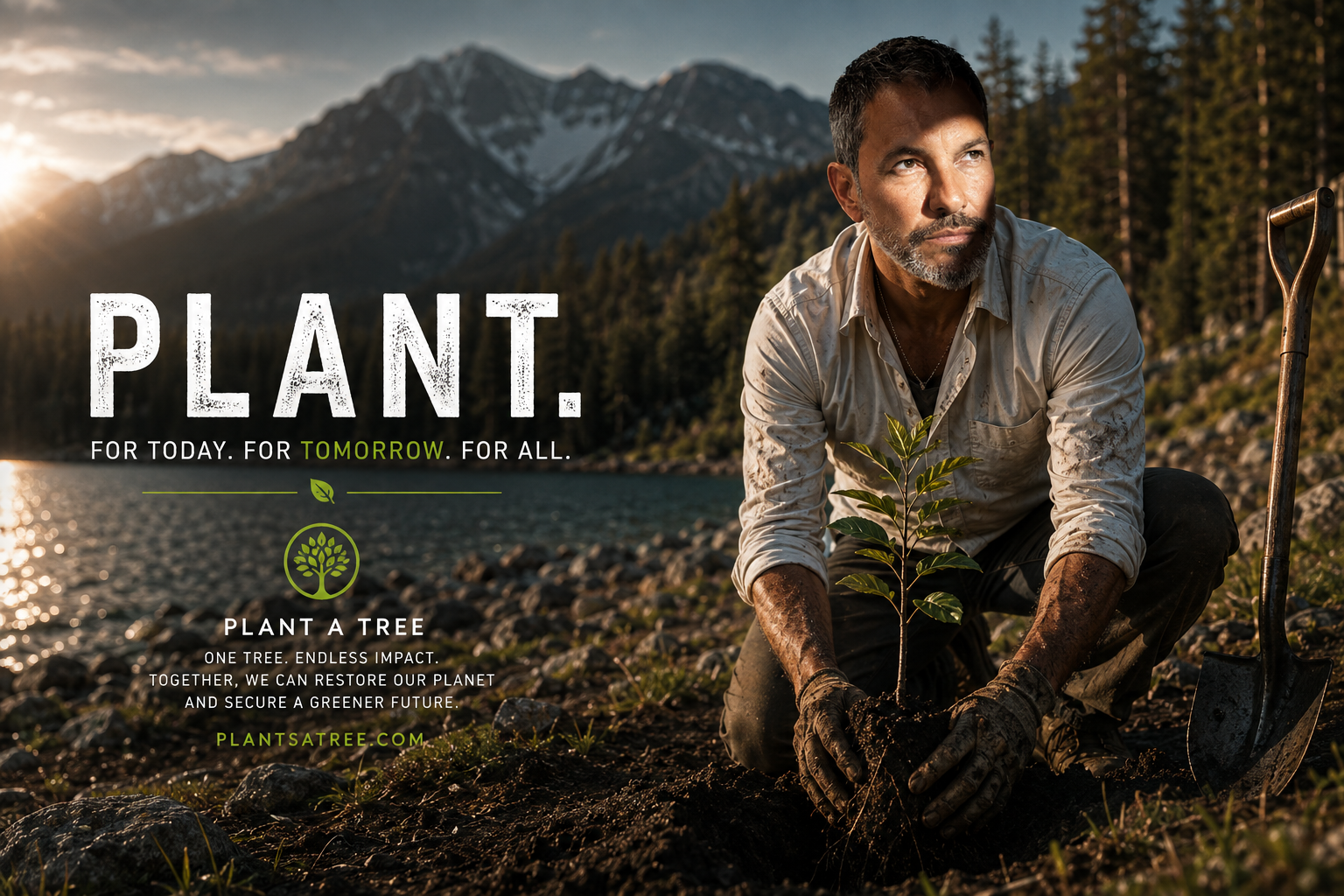
Do your part. Plant a tree. • plantsatree.com